

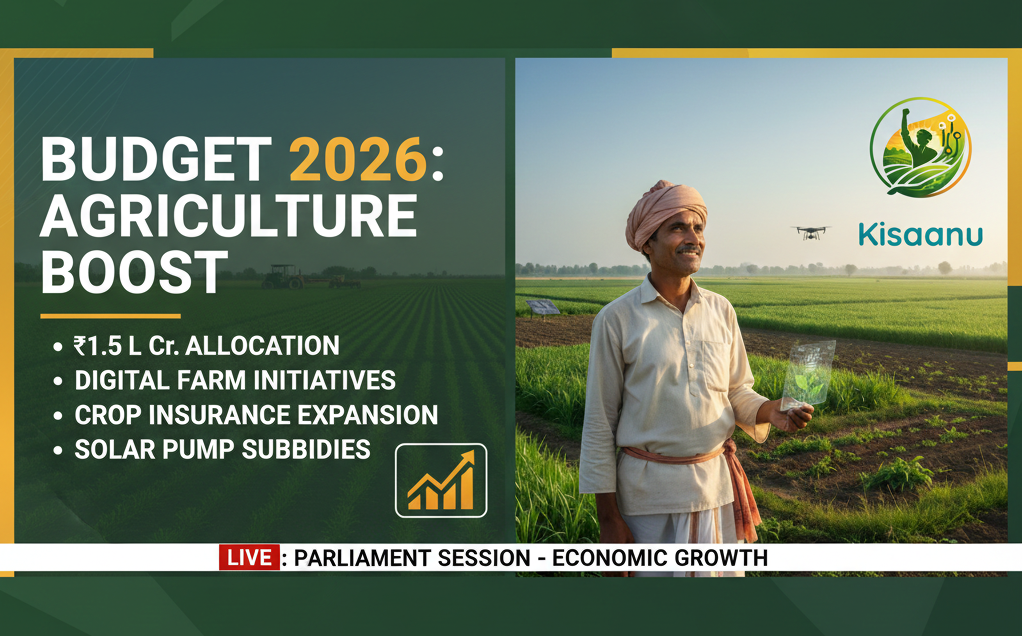
The Union Budget 2026–27 outlines a clear and deliberate policy direction for Indian agriculture. Instead of relying on short-term subsidies or temporary relief measures, the focus has shifted toward productivity enhancement, technology adoption, and long-term institutional development.
One of the most significant announcements for the sector is the launch of Bharat-VISTAAR. This national initiative integrates the AgriStack digital infrastructure with ICAR’s agricultural knowledge using artificial intelligence. The objective is to provide farmers with customized, localized advisory services that support better decision-making and help reduce farming-related risks.
The Budget also reiterates its commitment to increasing farmer incomes, particularly for small and marginal farmers. Rather than relying solely on price-based support mechanisms, the emphasis is on productivity improvement and entrepreneurship. Key areas of focus include crop diversification, high-value agriculture, allied sectors, and post-harvest value creation.
Farmer Producer Organisations, cooperatives, and MSMEs continue to receive policy backing through improved access to finance, simplified compliance frameworks, and stronger integration with formal markets. These measures aim to strengthen farmer-led institutions as sustainable and credible participants in the agricultural value chain.
Infrastructure development remains a central pillar of the Budget. Increased public capital expenditure and a strategic focus on Tier II and Tier III cities are expected to gradually improve agri-logistics, warehousing, transportation, and market access. Over time, these investments can play a crucial role in reducing post-harvest losses and improving aggregation efficiency.
For the agritech sector, the Budget signals a preference for deeper integration with national digital systems and solutions that demonstrate measurable on-ground impact. Technology models that combine data, advisory services, and field-level execution are better aligned with the policy direction outlined.
Overall, Union Budget 2026–27 positions agriculture as a sector driven by systems, technology, and long-term capacity building. While the full impact will unfold gradually, the framework sets the stage for a more stable, resilient, and productivity-oriented agricultural ecosystem.
केंद्रीय बजट 2026–27: कृषि और एग्रीटेक के लिए प्रमुख बिंदु
केंद्रीय बजट 2026–27 भारतीय कृषि के लिए एक स्पष्ट और सोच-समझी हुई नीति दिशा प्रस्तुत करता है। अल्पकालिक सब्सिडी या अस्थायी राहत उपायों के बजाय, इस बजट में उत्पादकता वृद्धि, तकनीक अपनाने और दीर्घकालिक संस्थागत विकास पर जोर दिया गया है।
इस क्षेत्र के लिए सबसे महत्वपूर्ण घोषणाओं में से एक है भारत-VISTAAR की शुरुआत। यह एक राष्ट्रीय पहल है, जो AgriStack डिजिटल इंफ्रास्ट्रक्चर को ICAR के कृषि ज्ञान के साथ कृत्रिम बुद्धिमत्ता के माध्यम से जोड़ती है। इसका उद्देश्य किसानों को उनकी स्थानीय परिस्थितियों के अनुसार अनुकूलित सलाह उपलब्ध कराना है, ताकि वे बेहतर निर्णय ले सकें और खेती से जुड़े जोखिम कम हों।
बजट में छोटे और सीमांत किसानों की आय बढ़ाने की प्रतिबद्धता को भी दोहराया गया है। केवल मूल्य-आधारित समर्थन पर निर्भर रहने के बजाय, नीति का फोकस उत्पादकता सुधार और उद्यमिता पर है। इसमें फसल विविधीकरण, उच्च-मूल्य कृषि, सहायक क्षेत्र और कटाई के बाद मूल्य संवर्धन को प्राथमिकता दी गई है।
FPOs, सहकारी संस्थाओं और MSMEs को भी निरंतर नीति समर्थन मिला है। बेहतर वित्तीय पहुँच, सरल अनुपालन व्यवस्था और औपचारिक बाज़ारों से मज़बूत जुड़ाव के माध्यम से किसान-नेतृत्व वाले संस्थानों को कृषि मूल्य श्रृंखला में टिकाऊ भागीदार बनाने का प्रयास किया जा रहा है।
इन्फ्रास्ट्रक्चर विकास इस बजट का एक प्रमुख स्तंभ बना हुआ है। सार्वजनिक पूंजीगत व्यय में वृद्धि और टियर II व टियर III शहरों पर विशेष ध्यान से कृषि लॉजिस्टिक्स, वेयरहाउसिंग, परिवहन और बाज़ार पहुँच में धीरे-धीरे सुधार की उम्मीद है। लंबे समय में यह निवेश कटाई के बाद होने वाले नुकसान को कम करने और बेहतर एग्रीगेशन में महत्वपूर्ण भूमिका निभा सकता है।
एग्रीटेक क्षेत्र के लिए यह बजट राष्ट्रीय डिजिटल प्रणालियों के साथ गहरे एकीकरण और ज़मीनी स्तर पर प्रभाव दिखाने वाले समाधानों को प्राथमिकता देने का संकेत देता है। वे तकनीकी मॉडल जो डेटा, सलाह और फील्ड निष्पादन को एक साथ जोड़ते हैं, इस नीति दिशा के साथ बेहतर तालमेल में हैं।
कुल मिलाकर, केंद्रीय बजट 2026–27 कृषि को एक ऐसी प्रणाली के रूप में प्रस्तुत करता है जो तकनीक, संरचना और दीर्घकालिक क्षमता निर्माण पर आधारित है। भले ही इसका प्रभाव धीरे-धीरे सामने आए, लेकिन यह नीति ढांचा एक अधिक स्थिर, सक्षम और उत्पादक कृषि पारिस्थितिकी तंत्र की नींव रखता है|